|
Farm Animals |
||
|
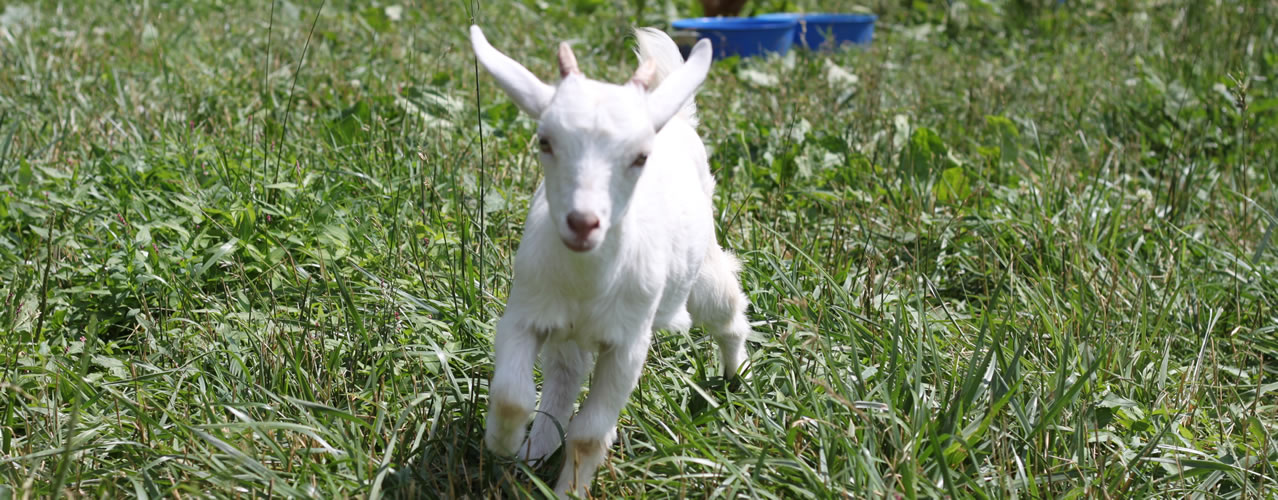
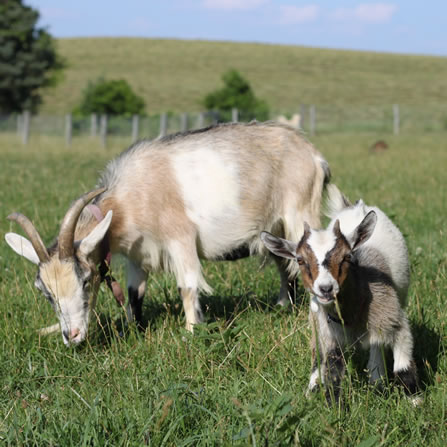
Our ALPINE GOAT is named Maggie Alpines are dairy goats. I’ve been at Clark’s farm from the very first day it opened. I enjoy seeing our visitors every year. Dairy goats can give 90 quarts of milk every month for 10 months of the year. We are good natured and curious. Alpines originated in the French Alps. Dairy goats like other animals and people! Goats don’t have front teeth on their top jaw. They have to scoop up their food with their tongue and lips! It tickles! Our ANGORA GOAT is Toulouse Angora goats grow long curly hair, which is called mohair. Toulouse likes to spend his days with his friend Maggie. He is very curious and likes lots of attention. Angoras began to arrive in the U.S. by 1849. They originated in the Himalayas. These goats are shorn twice a year and produce 10 to 14 pounds of creamy white or colored mohair. Spinners prefer colored mohair because it is easier to work with. Mohair is used to make blankets, clothes, mittens and scarves. Angora yarn comes from angora rabbits, not angora goats. The Naval Acedemy mascot goats are white angoras. Many of the other goats at the farm are Pygmy Goats. The Pygmy Goat first came to America in 1959 from West Africa. The Pygmy is a hardy, alert and animated animal. They are good-natured and make great pets. On the farm, they can graze hard-to-reach places and are easily adaptable to a wide variety of settings and climates. Pygmy Goats often have grizzled hair which means light and dark hairs are mixed together.
We also have a Boer Goat which is a large meat breed from Africa. The word Boer comes from the Dutch word meaning farmer. The can weigh between 100 and 225 pounds. |
Some Facts about Goats A male goat is called a buck or billy. A female is a doe or nanny. A
baby is called a kid.
A castrated male is called a wether. Goats are ruminants, like cows. They have 4 compartments in their stomachs and cloven hooves. Goats were the first animals domesticated by man in 10,000 B.C. They were the first animals to be used for milk by humans. Even today worldwide, more people eat and drink milk from goats than any other animals. There are 450 million goats around the world. Both male and female goats can have beards. Wattles are those little tufts of hair that covers the skin that dangles from the throat of some goats. Wattles serve no function and are thought to be remnants of gill slits that mammals shared somewhere back down the revolutionary tree. Goats, both male and female, can be born with or without horns (polled). Goats do not like to get wet and prefer to seek shelter when it is raining. Goats are quite agile and love to climb and jump. A group of goats is called a herd. Goats are very social animals.
Goats' milk is easily digestible and less allergenic than cow's milk and is higher in calcium, vitamin A and niacin than cow's milk. Goat meat is lower in fat and cholesterol than beef, pork, mutton and poultry. Goats are herbivores (plant-eaters) that spend most of their day grazing. Tennessee Stiff-Leg, also known as the wooden leg or fainting goat, is native to the United States. This breed suffers from recessive trait called myotopia. When frightened, this animal will experience extreme muscle stiffness causing extension of the neck and hind legs before it topples over on to the ground. Coffee was first discovered when goat herders noticed their goats acting very energetic after nibbling on coffee beans.
|