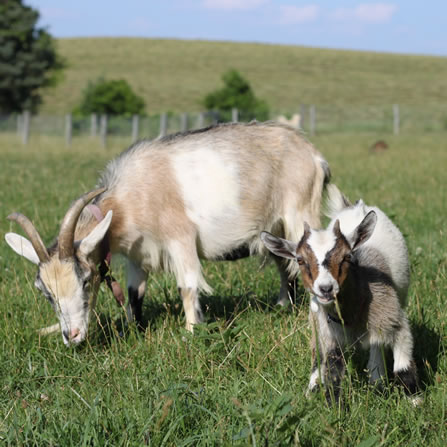
Goat,
common name for any of eight species of cloven-hoofed, horned mammals
closely related to the sheep. The two differ in that the goat's tail is
shorter and the hollow horns are long and directed upward, backward, and
outward, while those of the sheep are spirally twisted. The male goats
have beards, unlike sheep, and differ further by the characteristic
strong odor they give off in the rutting season.
The female
goat, or doe, which has smaller horns than the male, in ordinary usage
is often termed goat or nanny goat. The young are called kids. The male
goat is called buck, or, colloquially, billy goat.
A number of
breeds of goat are raised domestically throughout the world. These
animals probably descended from the bezoar goat. Several million are
raised in the United States. The goat is used for meat, as a milk
producer, as a pet, and as a beast of burden. Many parts of the animal
are economically valuable for a variety of purposes, such as the skins
for leather and the pelts for rugs and robes. One variety of domestic
goat, important for its commercial value, is the Angora. The most
valuable Angora is covered, except for the face and the legs below the
knees, with long, fine, silky hair called mohair. The brilliant,
transparent texture of mohair has made it a valued material.
Goat's milk
compares favorably in nutritive value with cow's milk.